
Thrombin Aptamer
AYA1809002
On-Demand Thrombin Control – The First Anticoagulant With a Built-In Molecular Off Switch
Thrombin Aptamer
AYA1809002
On-Demand Thrombin Control – The First Anticoagulant With a Built-In Molecular Off Switch
Thrombin Apatmer – AYA1809002 is a first-in-class, reversible DNA aptamer anticoagulant targeting thrombin’s Exosite I with >10,000-fold selectivity. Its sequence-paired DNA antidote provides full coagulation reversal in minutes – without foreign proteins, immune reactions, or $3,500/vial reversal agents.
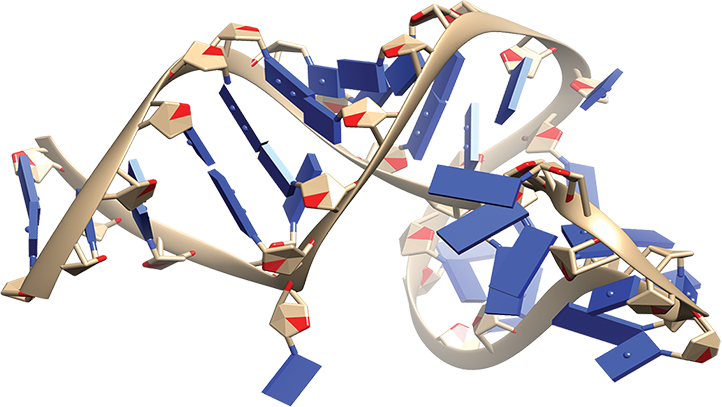
Binds thrombin Exosite I with IC₅₀ ~26 nM and Kᵢ ~9.3 nM. >10,000-fold selectivity over FXa, FXIa, kallikrein, plasmin, and trypsin.
Sequence-paired DNA antidote provides full Factor II activity restoration. Reversal effective after 1, 2, 4, 7, and 24 hours of plasma exposure.
Selectively blocks thrombin-mediated platelet aggregation while preserving ADP-mediated platelet responses. No CYP/P-gp interactions, no food/vitamin K restrictions.
24h+ serum stability at 37°C (vs. NU172 which loses activity by 7h). Stable in gastric, oral, and saliva environments. Projected shelf life 1–3+ years at 25°C.
- Non-valvular Atrial Fibrillation (AF) — Stroke prophylaxis in patients requiring long-term anticoagulation. Built-in reversibility addresses the major safety concern with current DOACs.
- Deep Vein Thrombosis / Pulmonary Embolism (DVT/PE) — Treatment and prevention with predictable pharmacokinetics (t½ ~10 h, steady state in 2–3 days, QD/BID dosing).
- Acute Coronary Syndromes (ACS) — Adjunct anticoagulation with the ability to rapidly reverse if bleeding occurs during intervention.
- Heparin-Induced Thrombocytopenia (HIT) — DNA aptamer mechanism avoids heparin entirely, providing a safe alternative for HIT patients who cannot receive heparin-based therapies.
Exosite I Binding — Confirmed by Competitive Assay:
Competitive ELISA using ligands with well-characterized thrombin binding sites definitively mapped AYA1809002 to Exosite I. Strong competition observed with canonical exosite I ligands NU172 (~3% residual binding) and hirudin (~11%). Active-site inhibitors dabigatran (~91% retained) and PPACK (~80% retained) showed minimal competition, confirming no catalytic site engagement. Fibrinogen did not displace the aptamer, consistent with the aptamer’s nanomolar affinity outcompeting fibrinogen’s micromolar affinity for exosite I — a key requirement for anticoagulant efficacy.
Selectivity:
IC₅₀ ~26 nM against thrombin with Kᵢ ~9.3 nM. No measurable inhibition of FXa, FXIa, plasma kallikrein, plasmin, or trypsin at concentrations up to 10 µM. This represents >10,000-fold selectivity for thrombin.
TT:aPTT Ratio — Mechanism Fingerprint:
AYA1809002 produces a TT:aPTT ratio of ≥5.6, compared to 1.8 for dabigatran and 1.0 for heparin. This disproportionate TT prolongation is the signature of exosite I-mediated inhibition: selective disruption of thrombin’s substrate recognition while preserving catalytic active-site function. This is a fundamentally different and more selective mechanism than any current anticoagulant.
Pharmacokinetics:
Linear, predictable PK with t½ ~10 h and steady state in 2–3 days. Clearance exclusively via glomerular filtration — no active tubular secretion, minimal protein binding. Stable in renal impairment, unlike FXa inhibitors (Xarelto ~33% renal + CYP/P-gp; Apixaban ~25% renal + CYP3A4) which accumulate in CKD patients.
AYA1809002 selectively suppresses thrombin-mediated platelet aggregation (via PAR-1/PAR-4 signaling) while completely preserving platelet responsiveness to ADP. This is a critical safety feature: the aptamer stops dangerous thrombin-driven clot formation without broadly impairing platelet function, reducing bleeding risk compared to agents that non-selectively suppress all platelet activation.
AYA1809002 alone does not induce spontaneous platelet aggregation, confirming no off-target platelet activation.
The DNA Antidote System:
A complementary reversal oligonucleotide (RC) binds AYA1809002 at a 1:1 molar ratio, sequestering the aptamer and fully restoring coagulation. This is a sequence-paired molecular antidote — no foreign proteins, no immune reactions, no supply chain limitations.
Speed of Reversal:
Thrombin time begins normalizing immediately upon antidote addition, with progressive restoration to near-baseline over 10–80 minutes.
Durability of Reversibility:
Reversal was tested after 1, 2, 4, 7, and 24 hours of aptamer incubation in plasma. At every time point, antidote addition restored PT, aPTT, TT, and Factor II activity toward baseline. The antidote works regardless of how long the aptamer has been circulating.
Comparison to Current Reversal Agents:
- Vitamin K / PCC for warfarin: Slow (6–24 h), thrombosis risk from pro-coagulant overshoot
- Protamine sulfate for heparin: Hypotension, anaphylaxis risk
- Idarucizumab for dabigatran: $3,500+/vial, humanized Fab with immunogenicity and rebound risk
- AYA1809002 DNA antidote: Minutes, no foreign protein, no immune reaction, no supply constraint
Key comparison points vs. each competitor:
- Warfarin: No narrow therapeutic index, no INR monitoring, no CYP2C9 metabolism, no dietary interactions, reversal in minutes not hours.
- FXa Inhibitors (Xarelto, Eliquis): No partial renal + CYP3A4/P-gp clearance that causes accumulation in CKD. No dependence on expensive, supply-limited andexanet alfa for reversal. Consistent clearance in renal impairment.
- Unfractionated Heparin: No continuous IV infusion, no aPTT monitoring, no HIT risk, no toxic protamine for reversal.
- Dabigatran (Pradaxa): Aptamer antidote vs. idarucizumab ($3,500+/vial, immunogenic, limited availability). Synthetic DNA vs. humanized Fab. Lower cost, no batch-to-batch variation, higher stability.
Serum Stability:
AYA1809002 retained 68–96% anticoagulant activity after 7 hours in human serum at 37°C and 36–60% after 24 hours. NU172 (reference aptamer) lost 57–91% by 7 hours and 90–100% by 24 hours. Superior nuclease resistance confirmed.
Gastrointestinal Stability:
Structurally intact after 1 hour in native gastric fluid. Intact after pancreatin exposure. Intact in human saliva for 60 minutes. Degradation only under high-concentration DNase I challenge. These findings support exploration of oral/mucosal delivery routes.
Accelerated Stress Testing (ICH-aligned):
Full activity retained after 2 weeks at 50°C and 60°C. Arrhenius Q10 modeling projects shelf life of 1–3.6 years at 25°C. Stable across pH 5.0–9.0 for 1 week. No photosensitivity detected. Resistant to mild oxidative stress (0.01% H₂O₂ for 2 weeks).
The Problem:
- Intracranial hemorrhage (ICH) occurs in 0.5–1.0% of anticoagulated patients per year, with 50% 30-day mortality.
- Major bleeds cost hospitals $25,000–$60,000 each, with excess length of stay averaging +3.38 days (~$1,950/event).
- 30-day readmission rates of 15–20% trigger CMS penalties.
- Average litigation defense cost: $54,165 per case.
The AYA1809002 Solution:
A built-in, rapid, low-cost reversal mechanism eliminates the need for $3,500+/vial idarucizumab, reduces bleeding complications through more precise thrombin targeting, and provides hospitals with a defensible safety profile that reduces both clinical risk and litigation exposure.
Current Stage: Late Lead Optimization — completing In Vivo Validations.
Next: GMP formulation and Pre-Clinical IND-enabling studies.
New High-Affinity Thrombin Aptamers for Advancing Coagulation Therapy: : Balancing Thrombin Inhibition for Clot Prevention and Effective Bleeding Management with Antidote (Cells/MDPI)
Partnership opportunities include: pharmaceutical co-development for clinical trials, licensing for specific indications, and hospital system partnerships for clinical adoption.